
You sit down for homework night, hoping for a smooth 30 minutes, but five minutes in, the tension is back. Your child is slumped over, avoiding eye contact, and says, “I can’t do this.” Or maybe they read the words perfectly but can’t tell you what the paragraph meant. If you feel worried, overwhelmed, and unsure where to start, you are not alone. This is exactly where we begin.
The most effective way to help a child struggling with reading and writing is to shift focus from “fixing” homework to building foundational skills and confidence. Begin by observing specific symptoms (decoding struggles, emotional avoidance, poor fluency) to identify the root cause, which may be a gap in phonics or processing speed. Parents can implement short, consistent daily routines (5-10 minutes of reading aloud and playful sound practice) to reinforce learning and show calm support. If struggles persist for over six months, seek a professional assessment to identify precise learning gaps and outsource the teaching tension.
- Look Beyond Behavior: Struggling isn’t laziness; it’s usually a structural gap in skill (like phonics or memory) or a crisis of confidence.
- Decoding vs. Fluency: Can they sound out words (decoding)? Or can they read smoothly and quickly, like they speak (fluency)? Understanding the difference guides your support.
- Confidence First: Mistakes are learning opportunities. Use positive scripts like, “That’s a hard one—good try. Let’s say it together.”
- Daily Doses: Consistency beats long, stressful sessions. Use fun, 5-minute routines focused on sounds and sight words.
- Assess the Gap: If struggles last six months or more despite consistent home support, an assessment can pinpoint the exact learning issue.
- Outsource Tension: Certified specialists provide targeted, systematic help, allowing you to return to being the calm, supportive parent.
1. Signs Your Child Is Struggling: A Quick Checklist
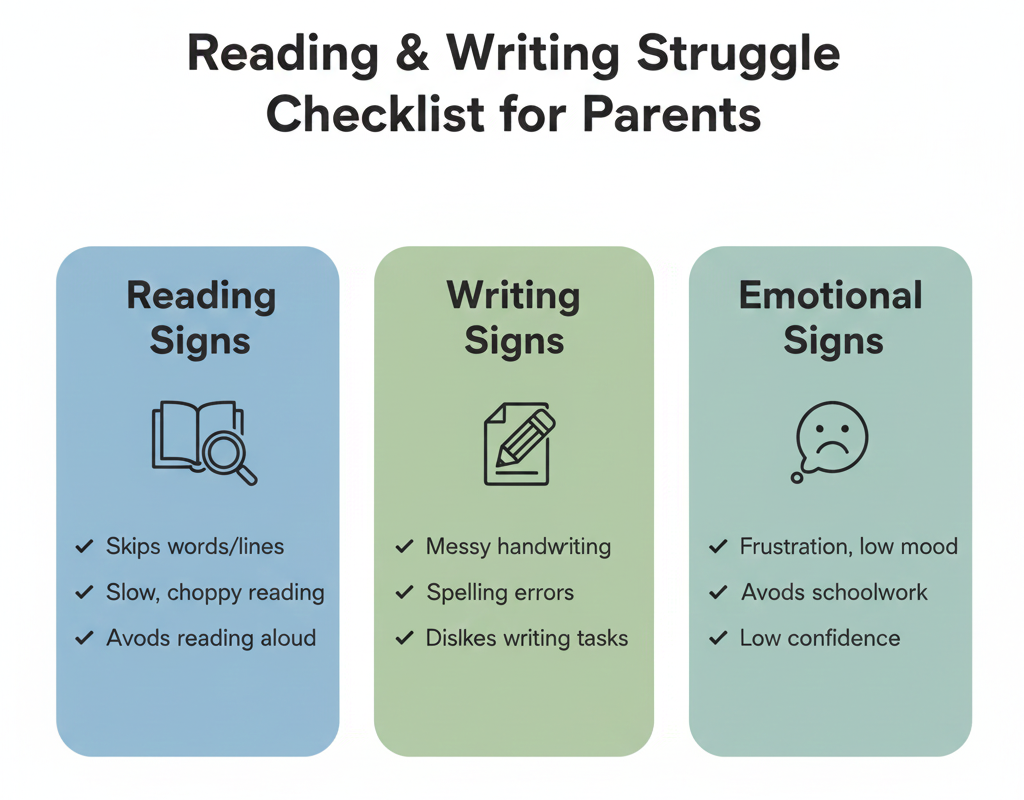
When parents are stressed, it is easy to miss the exact symptoms. Look for consistent patterns, not isolated incidents. Persistent difficulty across multiple areas indicates a genuine struggle that needs targeted support.
Reading Issues (The Basics)
- Sounding Out Trouble: Unusual difficulty breaking down simple words (like cat or dog) into individual sounds, despite repeated practice.
- Word-by-Word Reading: Reading is choppy and labored, rather than flowing like speech (poor fluency). They waste energy on decoding instead of focusing on meaning.
- Noticing Rhymes: Trouble identifying or enjoying rhymes, or recognizing words with the same beginning sound.
- Poor Word Memory: Difficulty remembering words they have seen many times before (sight words).
- Comprehension Gap: Reading words correctly, but struggling to summarize or answer basic questions about the story.
Writing Issues (Getting Thoughts on Paper)
- Messy Handwriting: Handwriting is slow, labored, or hard to read. They struggle with spacing between letters or staying on the lines.
- Spelling Inconsistencies: Spelling the same word differently within the same homework assignment, or being unable to retain spelling rules despite practice.
- Word Retrieval: Difficulty finding the right word during conversations or writing, often using vague filler words like “thing” or “stuff”.
- Resisting Tasks: Actively resisting writing tasks or having extreme difficulty getting thoughts down on paper.
Emotional Cues (What the Struggle Looks Like)
- Avoidance: Frequent frustration, avoidance, or meltdowns related to reading or writing homework.
- Anxiety/Worry: Expressing worry about going to school or showing increased anxiety when faced with academic tasks.
- Disproportionate Time: Reading-based assignments consistently taking two to three times longer than what peers require.
Quick Parent Check-In Quiz
Answer honestly: How often does your child display these behaviors? (Never / Rarely / Sometimes / Frequently / Always)
- Does your child frequently resist writing tasks, or have difficulty getting thoughts down on paper?
- Does their handwriting have unusual trouble correctly spacing letters in words, or staying on the lines?
- Does your child struggle to remember words they have seen many times before, or forget simple facts/instructions?
- After reading a chapter, do they struggle to summarize the main ideas or tell you why the characters made key decisions?
- Do homework tasks consistently result in frustration, tears, or high anxiety?
Self-Diagnosis: Answering “Frequently” or “Always” to three or more questions signals that it is time to seek professional, specific guidance and strategic support.
2. Why Kids Struggle (Root Causes Parents Don’t Expect)
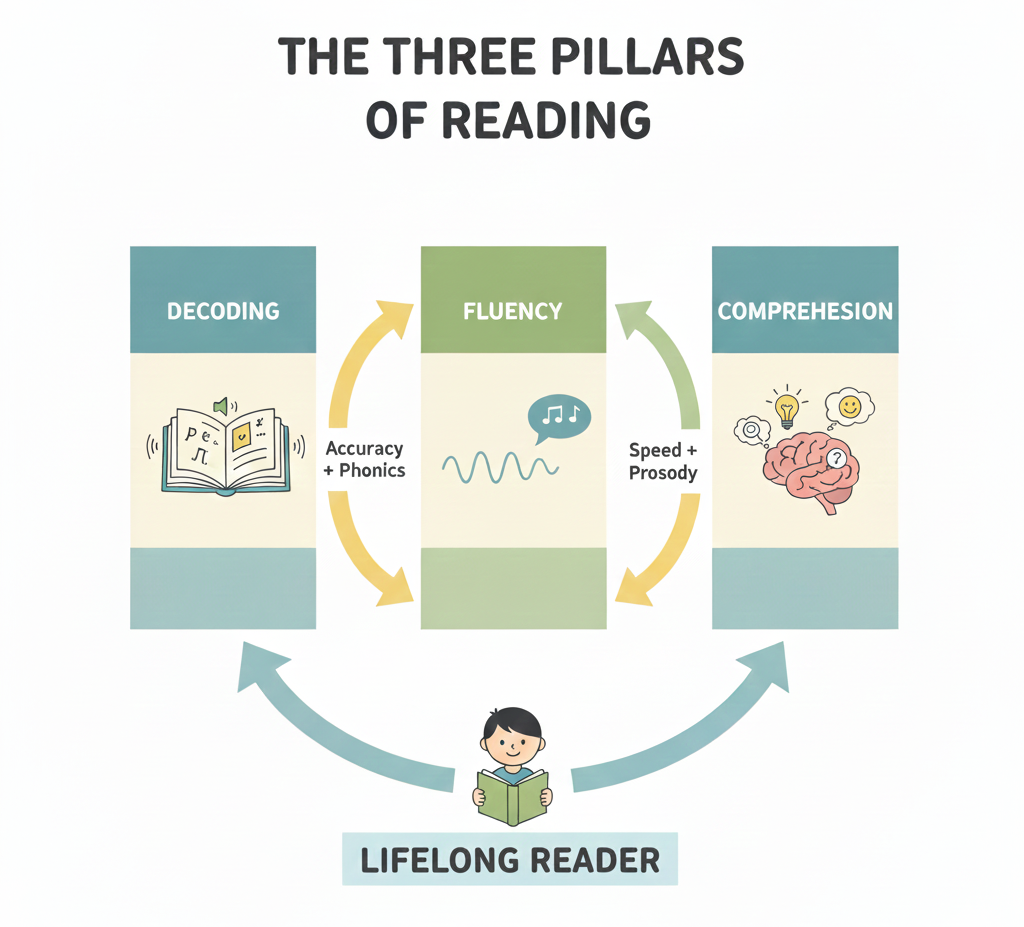
Reading and writing struggles are rarely due to a lack of effort. They nearly always stem from underlying gaps in how the brain processes language.
Decoding vs. Fluency vs. Comprehension
Reading requires two engines working simultaneously:
- Decoding (Sounding Out): This is the ability to look at letters and convert them into sounds, then blend those sounds into a word. Decoding is how your child “gets the words off the page.” If this is slow, the child expends too much mental energy on this one step, leaving less capacity for meaning.
- Fluency (Reading Like Talking): This is when decoding becomes automatic. The child reads effortlessly and with expression. Fluent readers don’t waste energy sounding out words, so they can focus entirely on meaning. Weak fluency automatically impairs comprehension.
Processing Lag and Handwriting Issues
Some struggles relate not to language itself, but to the speed at which the brain handles tasks.
- Handwriting (Dysgraphia): Difficulties forming letters, controlling spacing, or staying within margins is often called a grapho-motor problem (dysgraphia). Because neatness requires extreme concentration, the child gets mentally exhausted before they can even focus on the ideas they want to write.
- Memory and Attention: Underlying factors like attention deficits make it difficult for children to focus on complex text. This decreased attention causes emotional stress, which further impairs reading ability.
“There is no such thing as a child who hates to read; there are only children who have not found the right book.”
Remember: The goal is not perfection, but finding the motivation.
3. What Parents Can Do at Home (Simple Daily Habits)
The goal is to provide calm, consistent, positive reinforcement that separates reading practice from parental pressure. Avoid long, high-stress sessions. Consistency (5-10 minutes daily) always trumps length.
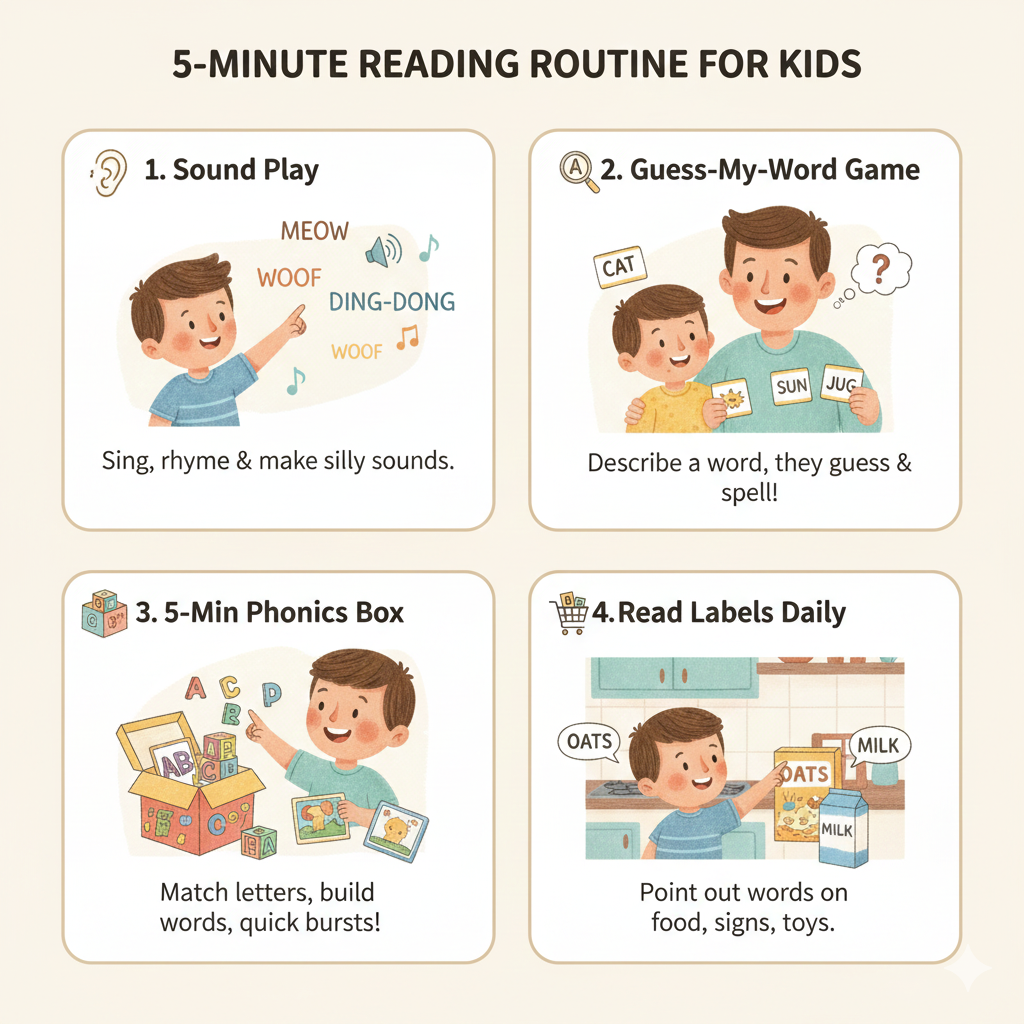
The 5-Minute Routine (Sound Play)
Use short, focused play sessions that reinforce the smallest, foundational skills:
- Sound Check: If your child is struggling with sounds, practice “Guess my word” games. Say individual sounds, like /m/, /o/, /p/, and have them blend them together to guess “mop.”
- Phonics Box: Dedicate a small “Five Minute Box” to basic skills. This box can contain index cards with tricky keywords and simple sentences to revisit quickly, at least four times a week.
- Reading Labels: Model reading by pointing out words on the road, reading labels and signs at the store, or signs throughout the day. Always rejoice in their accomplishments.
The 10-Minute Reading Ritual (Connection)
Make reading a bonding time, not a test. Focus on building knowledge and linking stories to real life.
- Find Their Obsession: Make reading materials—even graphic novels, magazines, or non-fiction about their favorite topics—readily available. Children are more likely to engage when they see the value in building knowledge about something they care about.
- Pre-Read Words: Before tackling a challenging book together, pre-read 3–5 difficult vocabulary words. Discuss the words and their definitions beforehand to build confidence and fluency.
- Think Aloud: When reading to your child, pause occasionally and think aloud. Say, “I wonder what’s going to happen next!” or “Wait, I didn’t understand that. I’m going to re-read that line.” This models that noticing confusion is normal.
How to Respond When They Say, “I Don’t Know”
When your child hits a wall, resist the urge to jump straight to the answer. Use supportive, strategic language instead.
Copy-and-Paste Parent Script
| Situation | Parent Script | Strategy |
| Stuck on a Word | “You’ve got a bit stuck—that’s OK. What helped you last time this happened? Did you sound out the first letter? Good try!” | Encourages self-help and lowers the emotional stakes. |
| Gave the Wrong Answer | “That’s a hard one—good try. Let’s say it together so you’ll remember it next time. You sounded that first part out brilliantly!” | Reacts positively to struggle, reinforces a growth mindset. |
| Doesn’t Understand the Text | “That’s confusing! Let’s go back. Did the author tell us if the character was happy or sad? Let’s check the picture.” | Models fixing comprehension problems by revisiting the text or looking for clues. |
Practical Parent Prompt
Try this tonight: Read one paragraph together, and ask your child one feelings-based question instead of a fact-based one.
Try This Prompt Tonight:
Ask: “What about that paragraph made you feel curious (or funny, or sad, or worried)?”
Why this works: This shifts the focus from factual memory (stressful) to emotional connection, making comprehension meaningful and fun.
4. When to Seek Professional Support
There is no shame in seeking external help. Often, outside support reduces the tension at home and preserves the parent-child relationship.
When to Make the Call
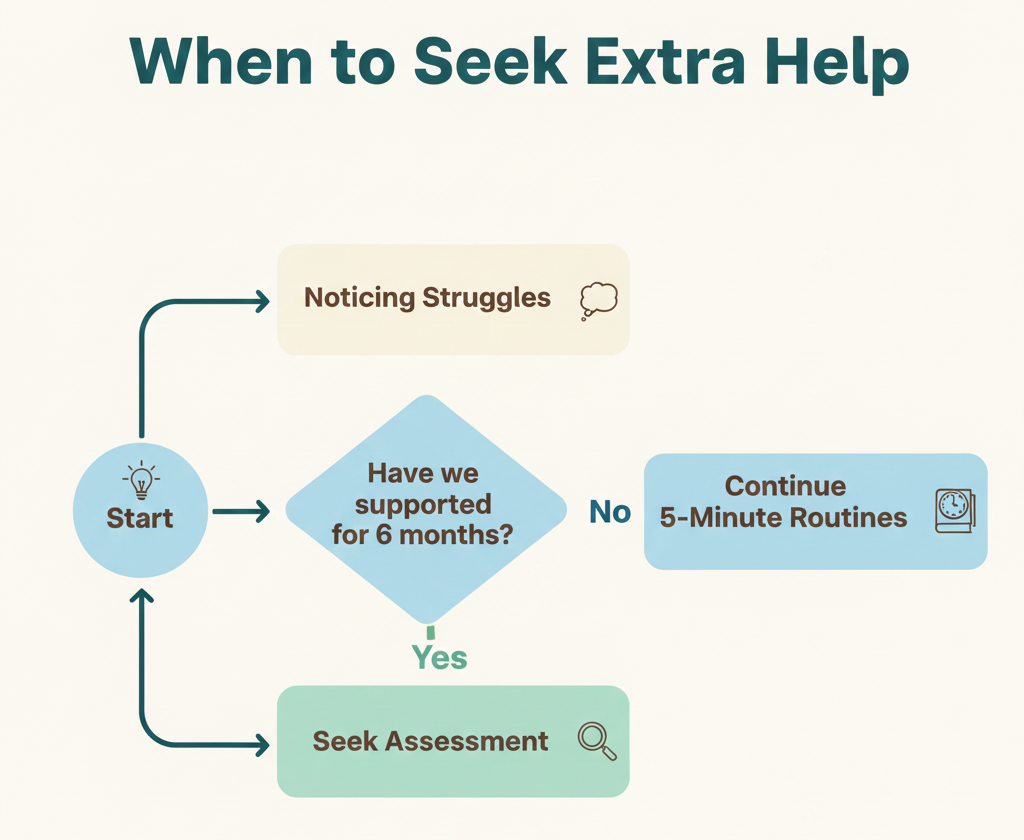
You should consider seeking a professional assessment if your child’s struggles meet these criteria:
- Persistence: Reading challenges last six months or more, despite consistent home support and classroom interventions.
- Overlapping Symptoms: You see several issues occurring simultaneously (e.g., poor memory and resistance to writing and anxiety).
- Significant Gap: Reading performance is consistently and significantly below age or grade-level expectations (especially after Grade 1).
- Growing Emotional Impact: Development of anxiety, school avoidance, or declining self-esteem related to the struggle.
What Professional Support Does
- Assessment is Key: A professional reading assessment checks more than just word recognition. It measures reading speed, accuracy, expression (fluency), and comprehension. Crucially, it identifies specific gaps in foundational skills like phonics or processing speed.
- Tutoring vs. Specialist: While a general tutor helps with academic review, if a learning difference is suspected, a Certified Academic Language Therapist (CALT) or certified specialist provides diagnostic, explicit, systematic intervention. This approach is specifically tailored to the unique way that child learns how to read and write.
- The Power of Outsourcing: Hiring a tutor or specialist reduces parent-child tension. It allows the parent to return to their primary role: being a calm, supportive mentor, rather than a frustrated teacher.
The Confidence Boost
A parent was deeply concerned because their 8-year-old, Alex, would shut down whenever asked to read. The homework was a nightly struggle. After strategic support was introduced, which created an environment of equal power distribution during practice, the transformation began. The child stopped fighting, finding an identity as a capable student. The result: Alex’s fluency improved, but the most profound change was behavioral. Alex began reading voluntarily, not because his problem was “cured,” but because the non-judgemental environment restored his confidence and identity as a capable learner.
You Are Their Best Advocate
Feeling worried and stressed is a sign that you are a caring parent. Remember that reading and writing struggles are common and highly manageable with the right strategy. By shifting your focus from fixing homework grades to building specific foundational skills and nurturing a positive, non-judgmental relationship, you empower your child to feel safe enough to learn. Be their consistent source of calm support, and never stop reading to them—even if they are ten years old.
Your Next Step: If you have identified multiple persistent struggles and want clear, specific answers to your child’s learning gaps, the best first step is to seek a professional learning assessment.
If you are ready to take the next calm step, click here to schedule a 15-minute consultation to learn about the assessment process. Finding the right diagnosis is the first step toward giving your child the precise support and the confidence they deserve.