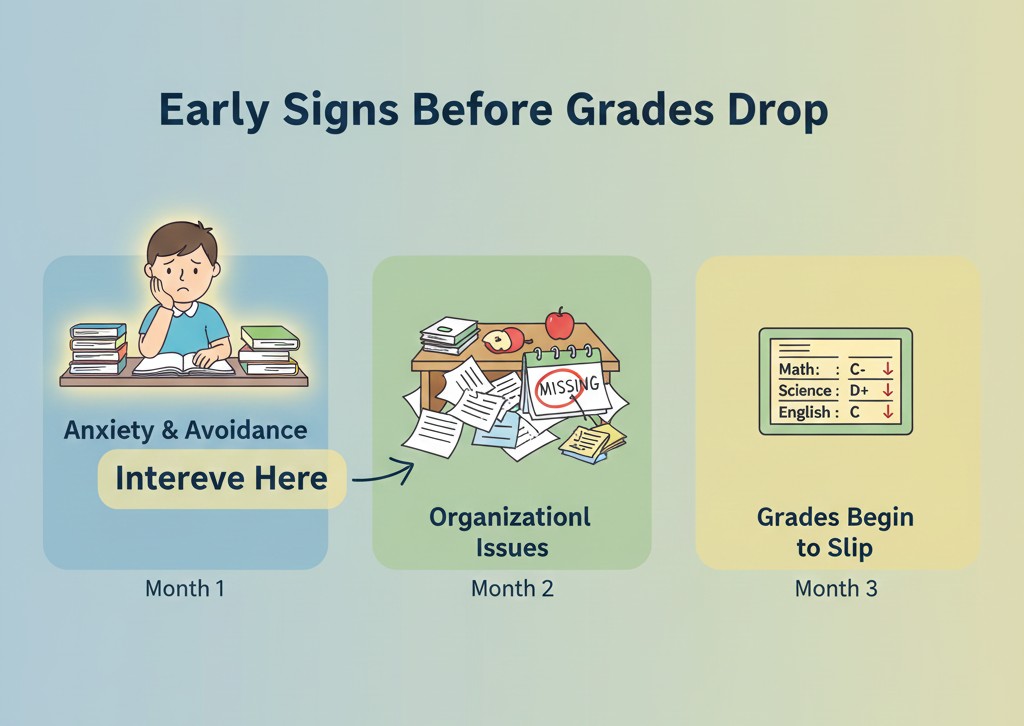
The key difference between classroom teaching and personalized tutoring is the scope and focus. Teachers deliver a broad, mandated curriculum to a large group at a fixed pace, focused on academic progression. Tutoring, conversely, provides highly personalized, one-on-one guidance that surgically targets specific learning gaps, reinforces confidence, and adjusts the pace exactly to your child’s needs. The right time to start tutoring is often before grades drop, based on emotional signals like homework avoidance, low self-esteem, or anxiety.
1. What is Classroom Teaching? (The Group Dynamic)
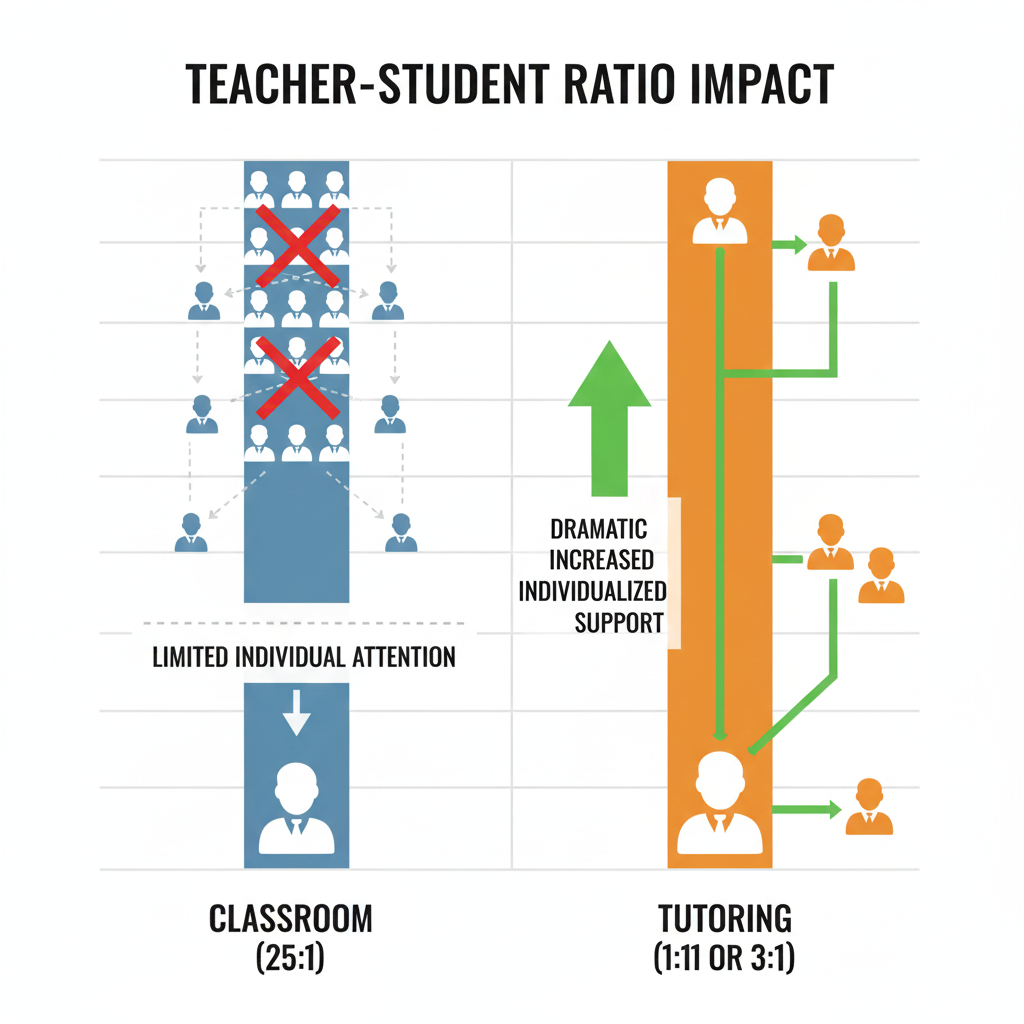
As a parent in Canada, you trust the school system, but you need to understand its limitations. A classroom teacher is an expert, but they are balancing the needs of 25+ students simultaneously.
The Reality of the Group Setting:
- Curriculum Pace: The teacher must adhere to the standardized provincial curriculum and timeline. If your child misses one core concept, the class must move on, leaving a foundational gap that grows wider over time.
- Limited Personalization: With high student-to-teacher ratios, individual attention for struggle or enrichment is limited. The instruction must remain relatively one-size-fits-all.
- Performance Expectations: The focus is on ensuring every student grasps the material enough to pass evaluations. There is less time for deep diagnosis into why a student is struggling, only that they are struggling.
Micro-Summary: Classroom teaching provides comprehensive curriculum delivery for a large group. It is essential for broad knowledge but cannot provide the highly focused, sustained attention some children need to master complex concepts.
2. What is Personalized Tutoring? (The Individual Focus)
Tutoring is not a replacement for school; it is a surgical supplement delivered by an expert who can focus entirely on one child’s journey.
The Goals of Personalized Support:
- Personalized Gaps Assessment: A tutor first identifies the specific, root cause of the struggle—is it poor fractions knowledge, or low reading fluency? They don’t waste time reteaching what the child already knows.
- Pace Matching: Instruction is tailored to the student’s specific learning style—visual, auditory, or kinesthetic. They slow down on difficult concepts and move quickly through mastered areas.
- Confidence-First Teaching: Because the setting is informal and one-on-one, the tutor creates a safe space where mistakes are celebrated as learning opportunities. This is crucial for reversing negative self-talk and restoring self-esteem.
- Emotional Safety: For a child dealing with high school stress or test anxiety, the tutor offers a non-judgmental accountability partner, lowering pressure often felt at home.
Micro-Summary: Tutoring provides flexible, targeted instruction that builds confidence and addresses specific gaps. It is focused on immediate mastery and individual goals, adapting the curriculum pace entirely to the student.
Short Educator Quote
“Tutors simply have more time and resources on their hands to prepare lessons and cater to different learning styles and goals. That’s why tutoring can help students who are either struggling to keep up or whizzing ahead to fulfill their potential.”
3. Deep Comparison: Classroom vs. Tutoring
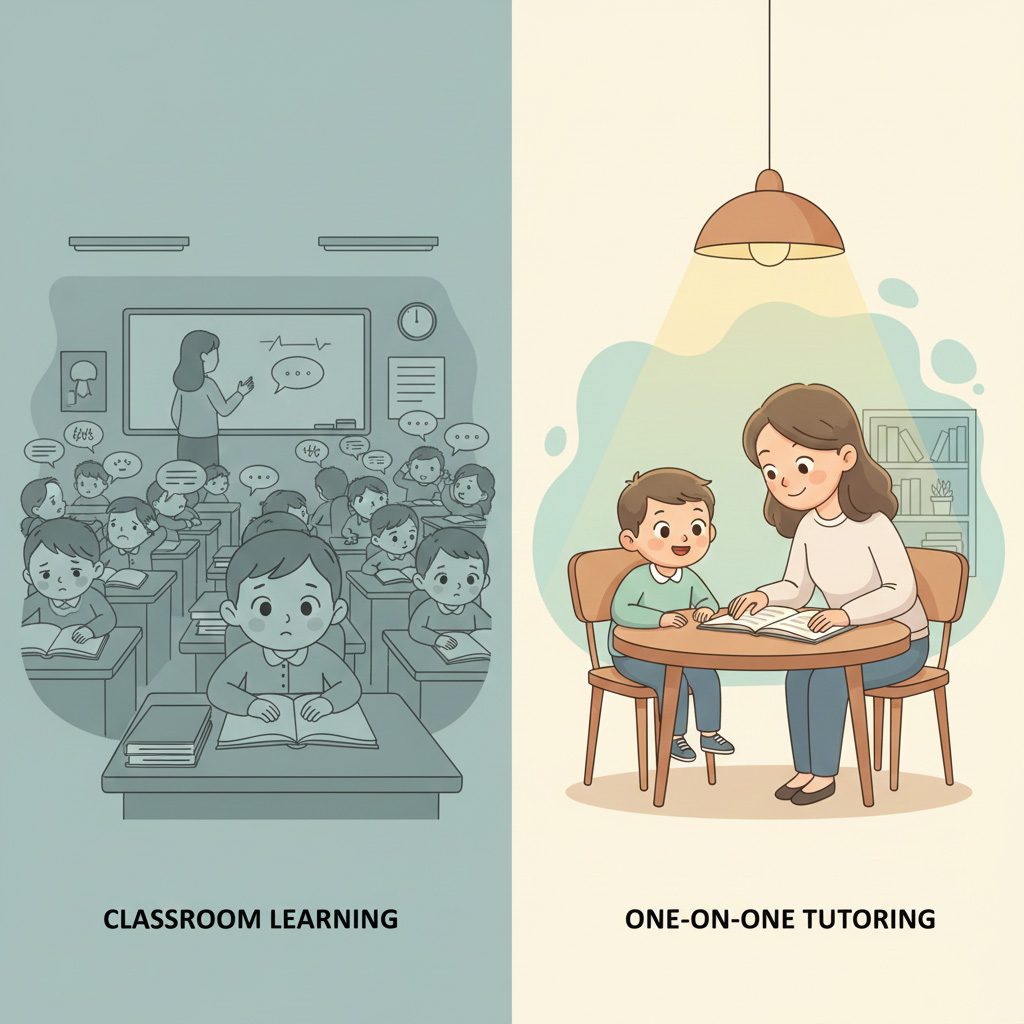
Understanding this comparison is key to making the best investment for your child.
| Feature | Classroom Teaching | Personalized Tutoring |
| Personalization | Limited; one-size-fits-all approach. | High: Instruction tailored to individual learning style. |
| Emotional Comfort | Formal, high-stakes testing environment. | Informal, relaxed, and confidence-building. |
| Feedback Speed | Slow; assessed via tests/report cards (weeks later). | Fast; immediate, ongoing assessment and correction. |
| Curriculum Flexibility | Rigid; must follow provincial curriculum. | Flexible; can review Grade 7 material in Grade 9 to fill foundational gaps. |
| Skill Gap Detection | General diagnosis (e.g., “needs help in Math”). | Specific diagnosis (e.g., “struggles with conceptual understanding of algebra”). |
| Confidence Building | Incidental (based on group success). | Explicit (focus on celebrating mastery and effort). |
Ask Yourself This
“Is the effort my child is putting in matching the results they are getting?” If the effort is high but the results are low, the problem isn’t effort—it’s the method. A tutor can change the method.)
4. When Is the Right Time to Start Tutoring? (Age-Based Guide)
The best time to start is when you notice a struggle has become a pattern—long before the report card arrives.
K–Grade 3: Building the Foundation (1–2 hours per week)
- Emotional Signals: Homework tears, refusal to read aloud, or expressing worry about school.
- Academic Signals: Struggling with basic phonics or sight words; inability to follow multi-step instructions.
- Focus: Tutoring should be short, play-based, focusing on foundational literacy and math comfort. Starting too formally here risks fatigue.
Grades 4–6: The Transition Years (2–4 hours per week)
- Emotional Signals: Saying, “I’m just not good at this,” or anxiety before tests. They may mask struggles with procrastination.
- Academic Signals: Grades start slipping in one or two subjects; poor time management; difficulty organizing their assignments.
- Focus: Filling early knowledge gaps before they become major roadblocks in complex subjects like fractions and paragraph writing.
Grades 7–8: Pre-High School Preparation
- Emotional Signals: Social withdrawal, increased school stress, or worry about high school workload.
- Academic Signals: Low grades persist despite long hours of effort; strong content knowledge but poor test performance (Test Anxiety).
- Focus: Study skills, time management, organizational help, and building independence.
Grades 9–12: Advanced Strategy and University Prep
- Emotional Signals: Overwhelmed by the workload; low self-esteem regarding a core subject.
- Academic Signals: Need high scores for university entrance; tackling advanced courses (e.g., AP or IB) where the class pace is too fast.
- Focus: Advanced content mastery, exam strategy, and skills to reduce test anxiety.
Checklist: Early Signs Your Child Needs Tutoring
- Frustration/Avoidance: Does your child regularly avoid starting homework, or does it frequently end in tears?
- Teacher Feedback: Has the teacher mentioned that your child is struggling with focus, organization, or keeping up with the group pace?
- Confidence Drop: Does your child make negative statements about their own intelligence, such as, “I’m bad at math”?
- Poor Test Scores: Do test scores not reflect the amount of time they spent studying at home?
5. Addressing the Hidden Parent Fears
Every parent experiences guilt or worry when considering extra help. These fears are normal, but they should not delay the support your child needs.
H3: Myth vs. Fact Box: Tutoring & Your Child
| Myth | Fact |
| “Tutoring will make them dependent.” | False. A good tutor teaches how to learn and helps your child discover their best learning style, fostering long-term independence and confidence. |
| “I don’t want to overburden my child.” | Reframed. Strategic, high-impact tutoring (1–2 hours) is less draining than four stressful hours of homework avoidance every week. It replaces chronic frustration with focused progress. |
| “Seeking help means I failed as a parent.” | False. Recognizing your child needs highly specialized, 1-on-1 instruction is a sign of great parenting. You are prioritizing their well-being and reducing pressure at home. |
Parent Reflection Prompts
- What specific academic struggle is causing the most emotional tension at home?
- What is my current goal for my child: better grades, or better confidence?
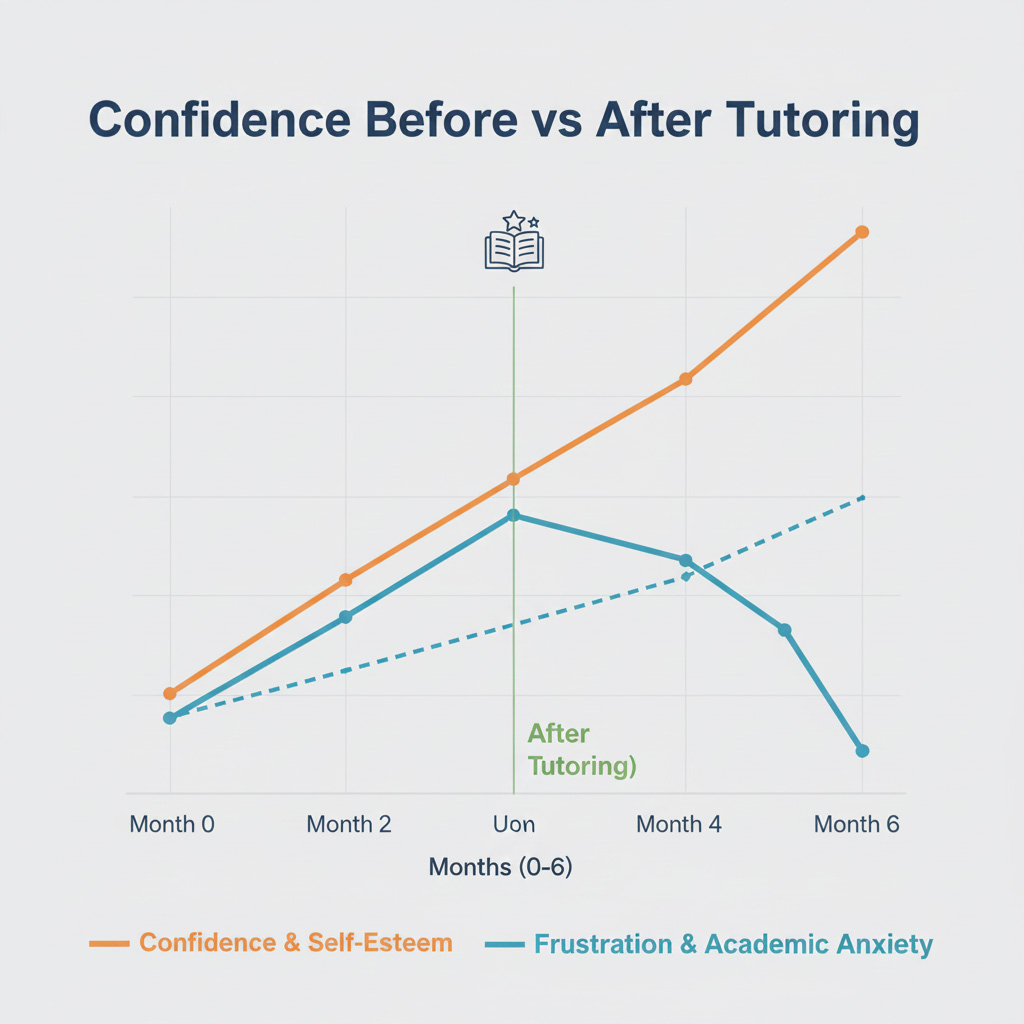
Confidence Progress Tracker Idea
Instead of just tracking grades, start tracking confidence! Use a simple scale from 1 (Totally Overwhelmed) to 5 (Confident & Independent) to rate your child’s attitude toward math or reading every week. Seeing this number rise is often more motivational than a single test score.
6. Parent Scenarios: Is This My Child?
These warm, relatable Canadian parent situations often signal it is time for personalized help.
Scenario Card 1: The Shy Perfectionist
- The Child: Sarah (Grade 5) is bright and completes homework perfectly. But in class, she refuses to raise her hand and freezes during timed tests. She cries privately over a B- grade.
- The Signal: High anxiety, low self-esteem, and inability to translate knowledge into high-stakes performance.
- Tutoring Focus: Test-taking strategies and confidence building. The one-on-one setting allows her to practice without the fear of judgment.
Scenario Card 2: The Overwhelmed, Disorganized Student
- The Child: Ethan (Grade 7) is disorganized. His grades are slipping not because he is unintelligent, but because he forgets assignments or doesn’t know how to start long-term projects.
- The Signal: Poor time management and organizational skills, which are essential for middle school success.
- Tutoring Focus: A tutor serves as an accountability and organizational coach, building a Personalized Learning Map that breaks down large tasks into small, manageable steps. For example, Step Up Academy of Learning uses certified teachers to structure these complex skills.
Scenario Card 3: The Gifted But Bored Student
- The Child: Liam (Grade 4) finishes his work in five minutes but then disrupts the class because he is bored. He is bright but his grades are inconsistent.
- The Signal: The classroom pace is too slow, causing him to disengage and potentially develop poor study habits.
- Tutoring Focus: Tutoring isn’t just remediation. It can provide enrichment—challenging Liam with advanced concepts at his own pace, keeping him engaged and motivated to love learning.
Mini Quiz: Is Tutoring the Right Next Step?
- Do I often find myself doing more teaching than parenting during homework time? (Yes/No)
- Has the struggle in one core subject persisted, despite school interventions, for more than two months? (Yes/No)
- Does my child express anxiety or negative self-talk (“I’m bad at math”) before or after school? (Yes/No)
If you answered YES to more, a professional assessment is highly recommended.
Conclusion and Next Steps
The decision to start tutoring is often driven by love, not by failure. If you are noticing persistent academic struggle, anxiety, or avoidance, getting specialized support is the kindest thing you can do for your child. It removes the stress from your home and places it in the hands of a professional who can deliver the specific, personalized attention the classroom environment simply cannot afford.
If you are unsure where your child’s learning gap lies, Step Up Academy of Learning offers free assessments with certified teachers. We provide clarity on your child’s specific needs—from foundational skills to organizational support. No pressure, just actionable insight to help them succeed.